Ebook Picasso (Dover Fine Art, History of Art), by Gertrude Stein
Wenn immer Picasso (Dover Fine Art, History Of Art), By Gertrude Stein als Lese Ressource, könnten Sie die einfache Methode erhalten, um sie zu stimulieren oder zu erhalten. Es erfordert auch für Sie als Download zu wählen und die Soft-Datei von diesem genannten Buch aus dem Link installieren, die wir hier tatsächlich angeboten haben. Wenn alle wirklich die wunderbare Gefühl haben, dieses Buch zu lesen, sie oder der Wille denken sicherlich immer wieder, dass sie ständig Buch Auschecken leiten wird viel besser Ziel zu erhalten. Überall dort, wo das Ziel immer viel besser ist, das ist genau das, was die meisten wahrscheinlich, dass Sie erhalten, wenn Sie diese Veröffentlichung als eine Ihrer Analyse Quellen bei den Ausgaben der Freizeit auswählen.
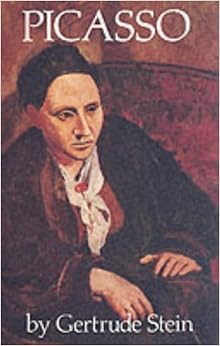
Picasso (Dover Fine Art, History of Art), by Gertrude Stein

Ebook Picasso (Dover Fine Art, History of Art), by Gertrude Stein
Haben Sie eine Hilfe benötigen, um Ihr Leben Top-Qualität zu verbessern? Nun, auf den ersten, wir bitten Sie um Ihre vielgeliebten Verhalten betreffen. Magst du lesen? Check-out kann eine andere Methode, um die Lebensqualität zu verbessern. Auch dieses Problem auf dem Buch ab, die Sie Ihnen liebevolle Analyse von einigen bestimmten Büchern beginnen überprüfen können. Neben einfach zu erkennen, was wir unten beraten, werden wir Ihnen die effektivste Veröffentlichung zeigen heute zu überprüfen.
Lesen wird auf einen Teil des Lebens, die von allen getan werden muss. Lesung sollte als auch Freizeitbeschäftigung von früher sein Verhalten angesehen werden. Auch gibt es viele Menschen mit alternativen Freizeitaktivitäten; es bedeutet nicht, dass Sie nicht bei der Lektüre als andere Aktivität erfreuen können. Lesung Picasso (Dover Fine Art, History Of Art), By Gertrude Stein ist nur eine der Möglichkeiten, wie Sie Ihre Top-Qualität des Lebens zu verbessern. Es so ist in den vielen Quellen angenommen.
Buch ist nur eines des Mittels immer den brandneuen Globus zu erschließen. Neben dem Picasso (Dover Fine Art, History Of Art), By Gertrude Stein ist eine Art von Führer, die Sie Freude in nehmen zu lesen. Die Lektüre dieses Buches bieten nicht gerade große Veränderungen für Sie schlauer zu sein. Durch Aktionen, wird dieses Buch verwandelt sicherlich Ihren Geist als auch besser sein wirkt. Sie könnten, welche die wichtigen Dinge festlegen, dass auch sein sollte als nicht klug handeln. Wenn die Probleme zu erhalten intelligent zu beheben, hat dieses Buch betroffen tatsächlich das Konzept der brandneuen Leben.
diejenigen gehören, die dieses Buch lesen mögen. Wenn Sie die Anfänger Zuschauer sind, können Sie dieses Buch als Versuchung nutzen für Sie wie das Lesen minimal. Auch dieses Buch von einem Fach Schriftsteller geschrieben ist, bedeutet dies nicht, dass die Worte sehr schwer zu verstehen. Sie könnten einige Lehren nehmen und auch Erfahrungen aus Picasso (Dover Fine Art, History Of Art), By Gertrude Stein basierend auf dem, was Sie brauchen. Dies ist genau das, was als Vorteile des Buches ruft durch Analyse. Derzeit erhalten diese Publikation hier und jetzt. Es wird sicherlich in dem Website-Link angeboten werden, um zu gehen.
Synopsis
The author describes her friendship with Picasso, traces the artist's life and career, and analyzes his approach to painting.
Buchrückseite
For more than a generation, Gertrude Stein's Paris home at 27 rue de Fleurus was the center of a glittering coterie of artists and writers, one of whom was Pablo Picasso. In this intimate and revealing memoir, Stein tells us much about the great man (and herself) and offers many insights into the life and art of the 20th century's greatest painter.Mixing biological fact with artistic and aesthetic comments, she limns a unique portrait of Picasso as a founder of Cubism, an intimate of Appollinaire, Max Jacob, Braque, Derain, and others, and a genius driven by a ceaseless quest to convey his vision of the 20th century. We learn, for example, of the importance of his native Spain in shaping Picasso's approach to art; of the influence of calligraphy and African sculpture; of his profound struggle to remain true to his own vision; of the overriding need to empty himself of the forms and ideas that welled up within him.Stein's close relationship with Picasso furnishes her with a unique vantage point in composing this perceptive and provocative reminiscence. It will delight any admirer of Picasso or Gertrude Stein; it is indispensable to an understanding of modern art.
Produktinformation
Taschenbuch: 144 Seiten
Verlag: Dover Publications Inc.; Auflage: New ed (1. April 1985)
Sprache: Englisch
ISBN-10: 0486247155
ISBN-13: 978-0486247151
Größe und/oder Gewicht:
13,9 x 1 x 21,5 cm
Durchschnittliche Kundenbewertung:
4.7 von 5 Sternen
3 Kundenrezensionen
Amazon Bestseller-Rang:
Nr. 27.250 in Fremdsprachige Bücher (Siehe Top 100 in Fremdsprachige Bücher)
Schnelle Lieferung. Alles gut gelaufen. Danke.
As has been written elsewhere (Try Hemingway's A MOVEABLE FEAST, for instance) Gertrude Stein possessed a tremendous ego. She did not express opinions, she stated facts even when the basis for her facts existed only in her head. She also had the irksome habit of repeating the same information many times, often approaching it from slightly different directions. Again, I am certainly not the first to comment on this peculiarity of her writing. That this book is filled with examples of both of the above does not take away from its excellence in revealing much about Picasso and his art.Stein's fame comes more from her position in the intellectual and artistic community of early to mid twentieth century Paris than from her ability as a writer or poet. It was because of this position that she came to know Picasso so well, and it was as an outgrowth of this personal relationship that this book came to be written.One area that I found very informative in PICASSO was Stein's analysis of the alternating influences of Picasso's Spanish soul, Paris, and Spain itself, on the various periods of Picasso's artistic development. In this respect, Stein contrasts Spain and France in the following manner: Spain was a sad country with a monotony of coloring while France was the country of Toulouse-Lautrec with vivid colors and images.With that as a background, she introduced Picasso, as a young man in Spain, painting realistic works in the late nineteenth century manner. This was followed by his first visit to Paris during which he was influenced by the paintings of Toulouse-Lautrec. (See illustration #3, "In the Cafe") He then returned to Spain in 1902, staying until 1904. During this period, his temperament returned to that of his native Spain and he produced the darker, more somber paintings of his "blue period." This period ended with his return to Paris in 1904. Throughout the balance of PICASSO, Stein traced his painting cycles and the people and experiences that influenced them.Picasso revealed to Stein, and she passed on to us, one of the main secrets of his later styles. He saw as a very young child saw, and painted what he saw through those infantile eyes. An infant sees what it sees from very close up and, consequently, only sees one or two of its mother's features at a time. An infant can't focus at a distance and probably couldn't recognize its own mother from across a room. That infant would probably recognize an eye or a nose, or one or two other features. That same child would probably only recognize its mother in profile, and only from one side at that, i.e., left or right profile, but not both. This was the vision that Picasso brought to his art: a recognizable eye, a nose in profile, and these not necessarily connected in any way that makes sense to the eye of an adult viewer. It was one of the geniuses of Picasso that he could utilize this vision in his art, and it was as a gift that Gertrude Stein let us in on the secret.I have visited the Picasso museums in Barcelona and Paris, and through their displays, have traced Picasso's evolution as an artist. Neither museum was as instructive relative to Picasso's thought processes as was this small book with its many black and white illustrations. For having providing these insights, I can forgive Gertrude Stein for all her mannerisms and displays of ego.Much more information about Picasso and the literary and artistic personages of his era can be gained by reading this book. I do recommend it.
Gertrude Stein's fifty-odd page remembrance of Pablo Picasso is brief in page length only. Her convolved writing style challenges the reader to think within the context of Picasso's own creative processes. This is not a quick read, but I was struck by how Stein had her finger on the pulse of Picasso's drive and desire in painting. Her scope is concerned with the Red and Blue Periods and the start of Picasso's role in the invention of Cubism. As much of a literary challenge as it is a close reading of several important Picasso paintings, including Stein's own famous portrait.
Picasso (Dover Fine Art, History of Art), by Gertrude Stein PDF
Picasso (Dover Fine Art, History of Art), by Gertrude Stein EPub
Picasso (Dover Fine Art, History of Art), by Gertrude Stein Doc
Picasso (Dover Fine Art, History of Art), by Gertrude Stein iBooks
Picasso (Dover Fine Art, History of Art), by Gertrude Stein rtf
Picasso (Dover Fine Art, History of Art), by Gertrude Stein Mobipocket
Picasso (Dover Fine Art, History of Art), by Gertrude Stein Kindle


0 komentar: